
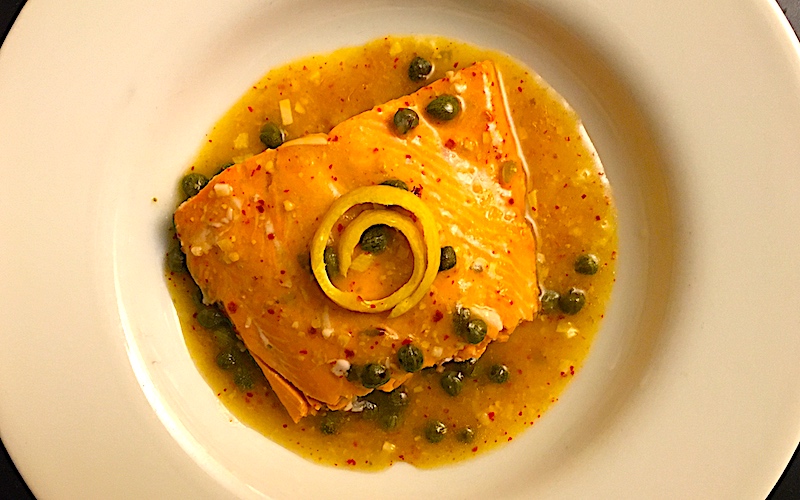
Chuck the Chicken: Try This Roasted Salmon Piccata with Lemon Miso Sauce
As a young married person starting a family, I didn't often cook fish for dinner because I didn't grow up eating or cooking with it—good fresh fish was hard to come by in our small Central Oregon town. Even after my parents moved the family to Portland there wasn't much available in the strip mall supermarkets around our suburban housing development, the streets strangely named after Native American tribes. (Pawnee Path? Shawnee Trail? Sioux Court? Seriously?)
 My mother was much more comfortable cooking red meat, what with her upbringing in an Eastern Oregon cattle ranching family. When we did have fish, it was most often from a can—tuna or the dreaded canned salmon, which was unceremoniously dumped in a dish, the indentations of the rings from the can still visible on its surface. Any whole fish tended to be less than absolutely fresh, requiring lots of what was called "doctoring" to cut the fishiness.
Needless to say, there was a lot I had to learn about cooking it.
Fortunately, we now have a myriad of choices for fresh-caught fish available at farmers' markets or one of many retail outlets featuring species caught off our own coast or harvested from regional waters. Recently I bought a portion of a friend's share of sockeye salmon from her Iliamna Fish Company CSF (Community Supported Fishery) subscription, several vacuum-sealed frozen fillets ready to thaw and throw on the grill or in a pan. (Check out this guide to Pacific Northwest CSA and CSF offerings.)
Since the weather was too inclement even for Dave, who's been known to stand over his grill with a beer in hand in an ice storm, I decided to try roasting it in the oven with a lemon piccata sauce that our friend Dana had made for a dinner. She'd come across a chicken piccata recipe that sounded great, but she had rockfish fillets on hand. Ignoring tradition like any creative cook, she decided to try a completely new dish on guests, subbing in the fish for the chicken. Excellent!
It seemed like salmon might be a good match, as well, so I followed her lead. Start to finish, it's ready in about half an hour…and I think you'll agree it's a winner. And it pairs nicely with my recently posted recipe for Turmeric Rice with Dried Tangerine Peels!
Salmon Piccata with Lemon Miso Sauce
2 Tbsp. olive oil
1 Tbsp. butter or margarine
1 Tbsp. garlic, chopped fine
1/2 c. fish or chicken stock
1/2 c. fresh lemon juice
2 Tbsp. capers
1 Tbsp. cornstarch
1 tsp. red pepper flakes
1 Tbsp. white miso (optional)
1 Tbsp. parsley, chopped fine, for garnish (optional)
1 1/2 lbs. salmon fillets
Preheat oven to 350°.
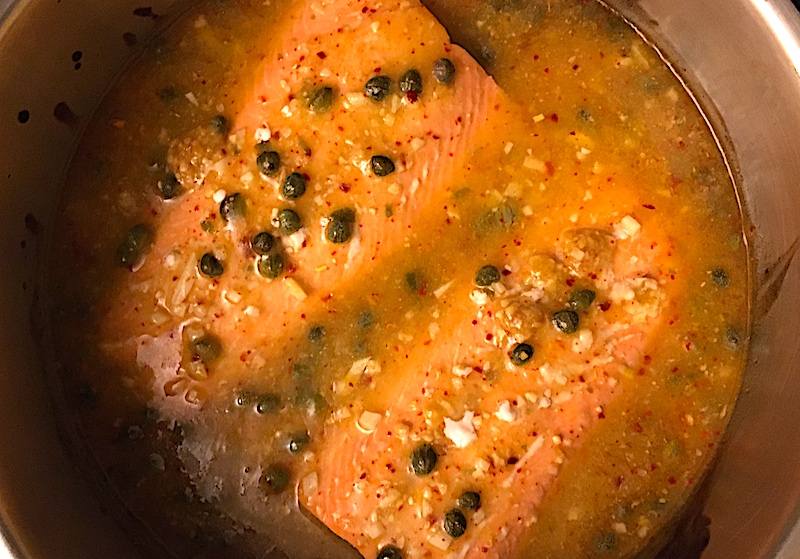
In a medium saucepan, heat oil and butter over medium heat. Add garlic and very briefly sauté until it's just warmed. Add lemon juice and stock and heat until it barely comes to a boil. Reduce heat to low, add capers and miso and stir to combine. Add a small amount of water to the cornstarch to make a thin paste. Add cornstarch to sauce while stirring, and allow to thicken slightly.
Place fish fillets in a 9" by 12" baking dish. Pour sauce over the top and roast in oven for 20-25 minutes until fish is cooked through.
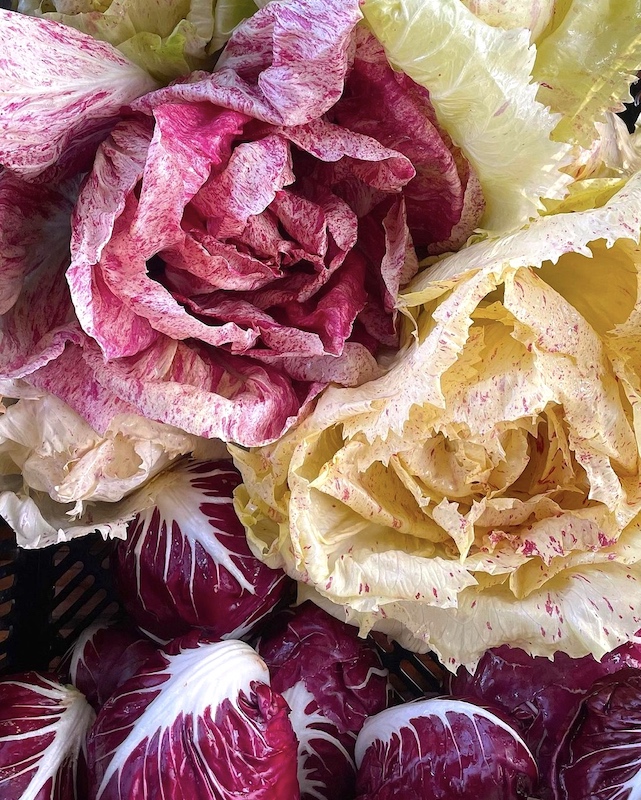 Radicchio season has been glorious this year, as evidenced by the gorgeous abundance of varieties at farm stands, farmers' markets and greengrocers. Not only has the weather been spectacular for this late fall crop, but more local farmers than ever are growing these slightly bitter members of the brassica family.
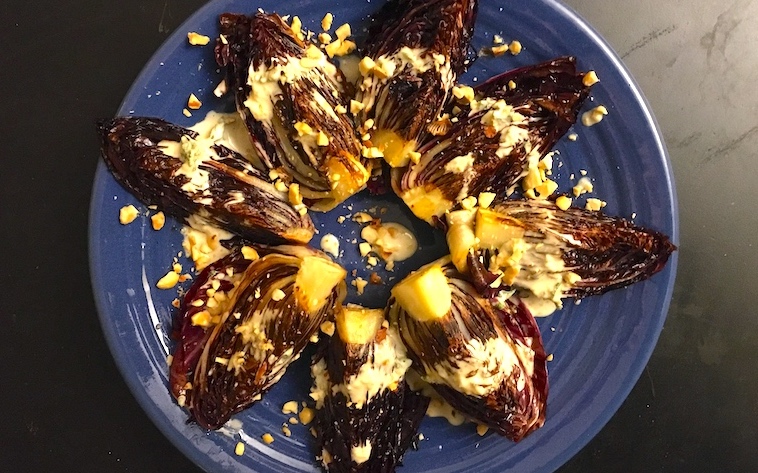
 So in late fall, my heart leaps when I see the first heads of Treviso and Castelfranco at the markets, and I can't seem to get enough of them in salads, chopped in wide ribbons and tossed with other greens and fall vegetables like black radish and fennel. I've also discovered an affinity between radicchio and our own hazelnuts—I've been crushing roasted hazelnuts and scattering them with abandon, where they bring a sweet counterpoint to the bitter notes of the chicory.
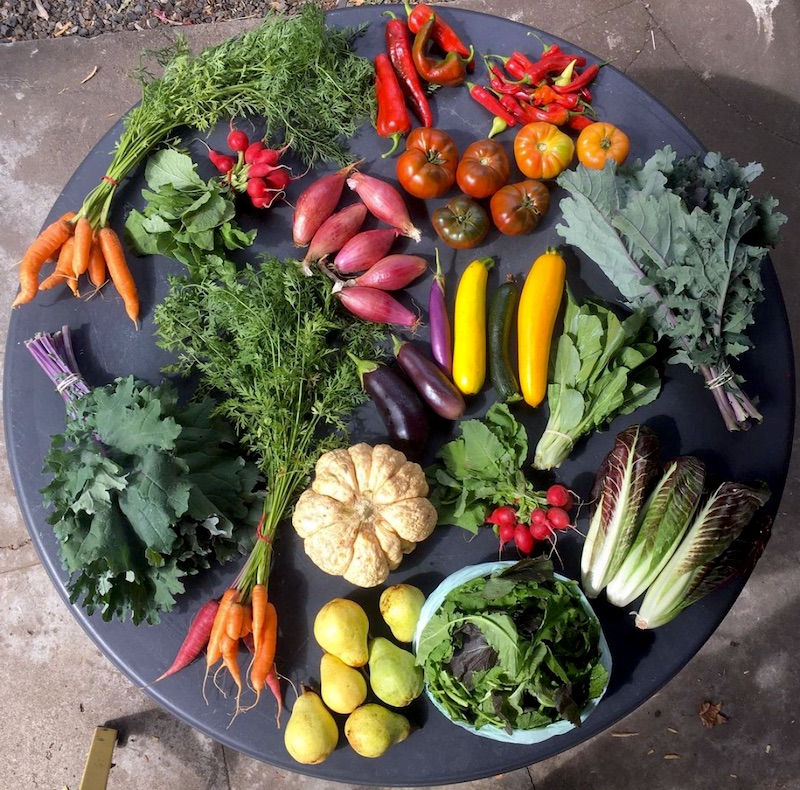

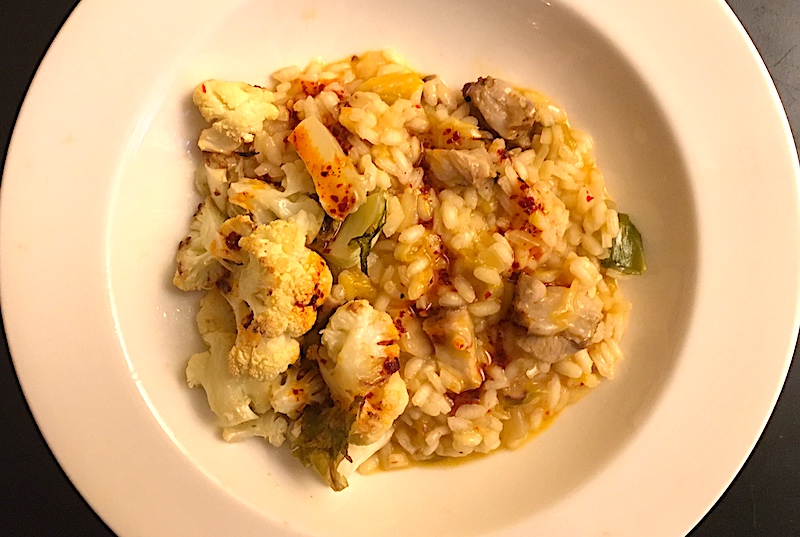
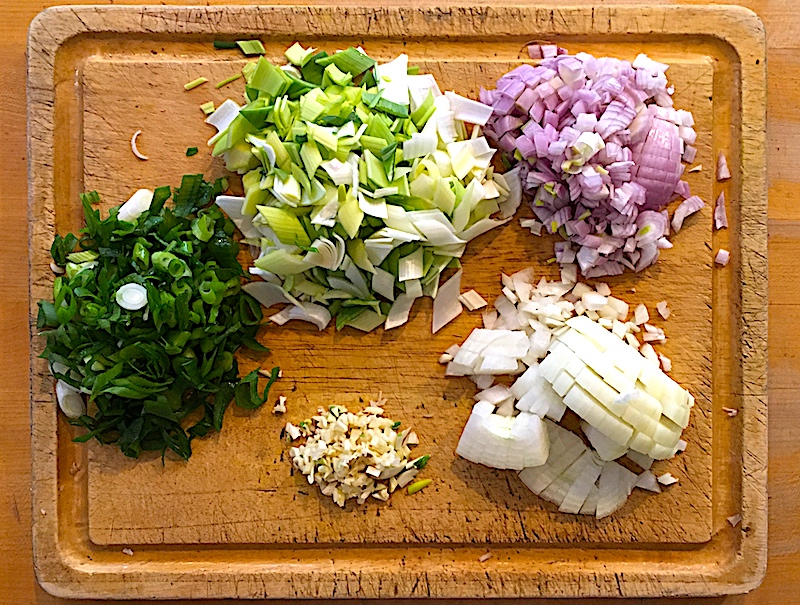
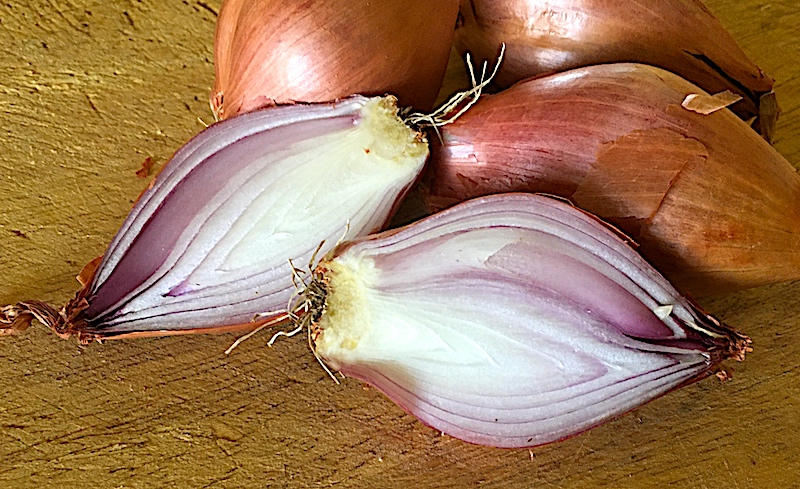
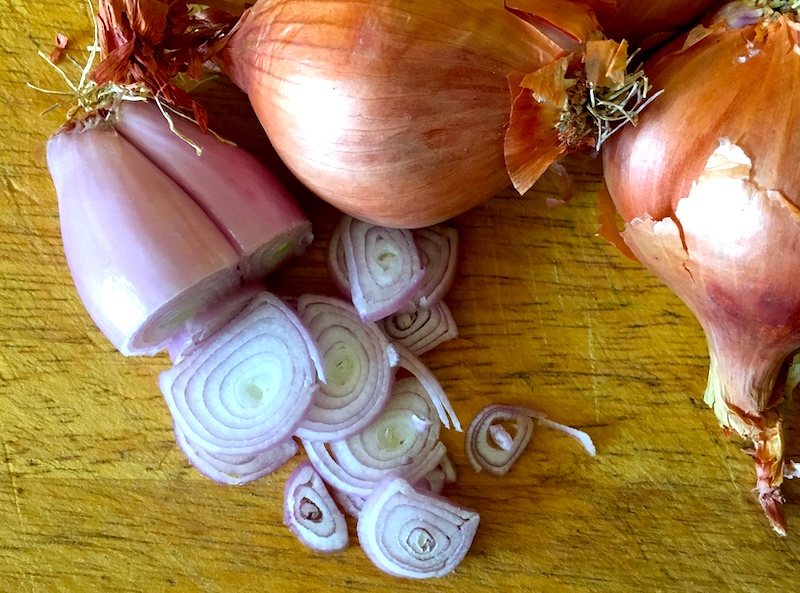 Shallots have a delicate, sweet flavor without the intense heat of an onion. They are preferable over onions in raw applications such as salad dressings and vinaigrettes. Finely diced, they provide a subtle bite to pan sauces and are delicious roasted whole, or pickled as a garnish. Shallots are ubiquitous in Vietnamese cooking, especially pho, where they are combined with ginger to give pho its unique taste and fragrance.
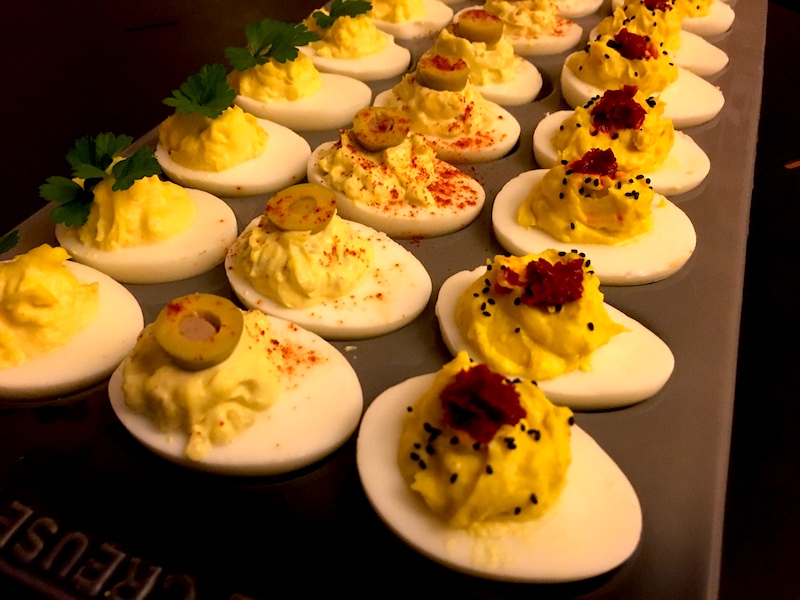
 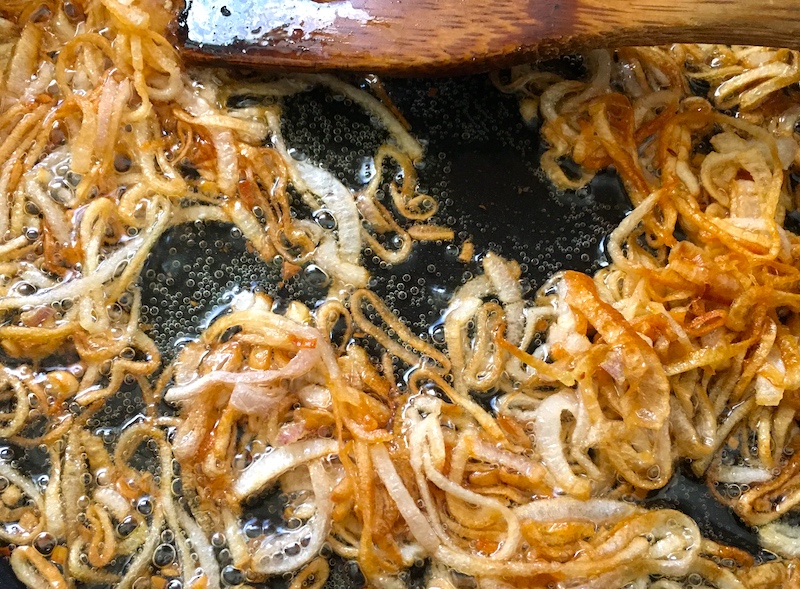 Frying shallots turns them into crispy, flavor-packed clusters that are good on almost anything. (This is not an exaggeration.) Beaverton Farmers Market Master Ginger Rapport keeps a container of them in her refrigerator at all times. Their caramelized flavor and crunchy texture adds sparkle to salads, potatoes, roasted or steamed vegetables, grain bowls, omelets, steaks, deviled eggs and avocado toast. Chopped, they can be added to dips or combined with mayonnaise as a sandwich spread. Bring cottage cheese to life with a sprinkling of fried shallots on top.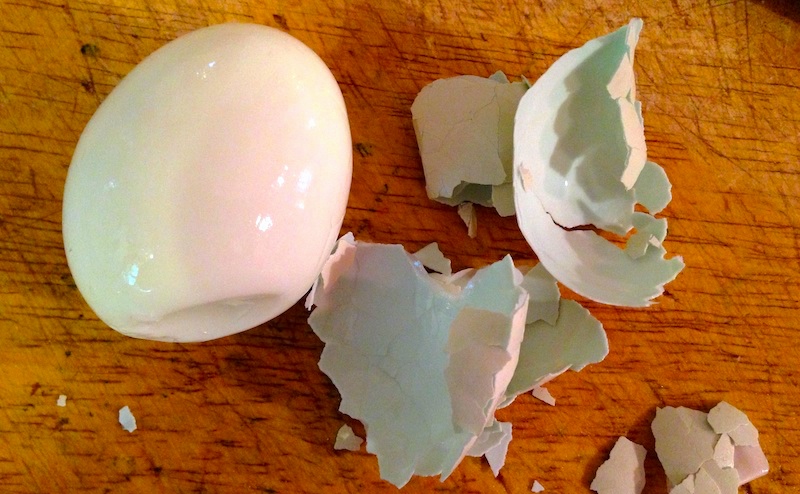
 One of the joys of using fresh eggs from pasture-raised hens is their flavor, that indescribably eggy brightness that comes from the chickens' diet of grass, bugs and minerals found in the soil around them. Their unctuous, velvety texture and brilliant deep yellow-orange color would have—and probably did—set Van Gogh's heart aflutter.
 And yes, anyone who's cracked open a fresh-from-the-hen egg will notice that the white does cling to the shell much more tenaciously that its sad, store-bought sibling. That's because eggs in the grocery coolers, even those labeled as "pasture-raised," can be up to a month old when you get them home. (The above-mentioned writer even suggested buying store eggs, then keeping them in the fridge for "seven to ten days." That would mean they could be up to a month-and-a-half old. Imagine how great those would taste!)
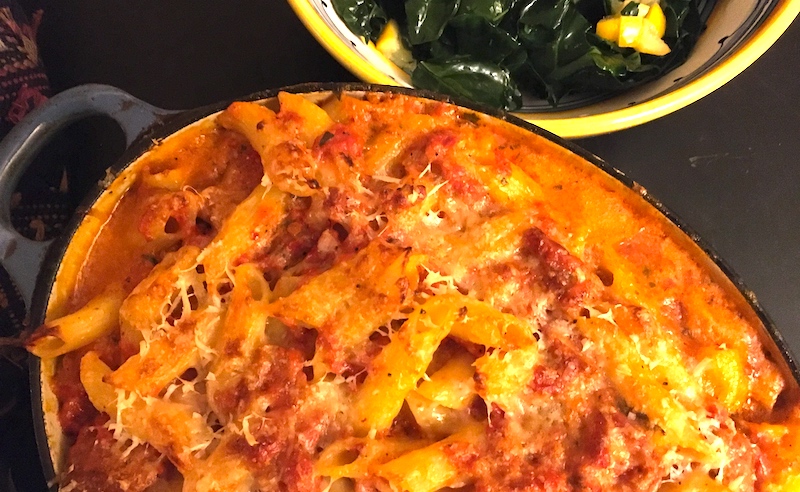
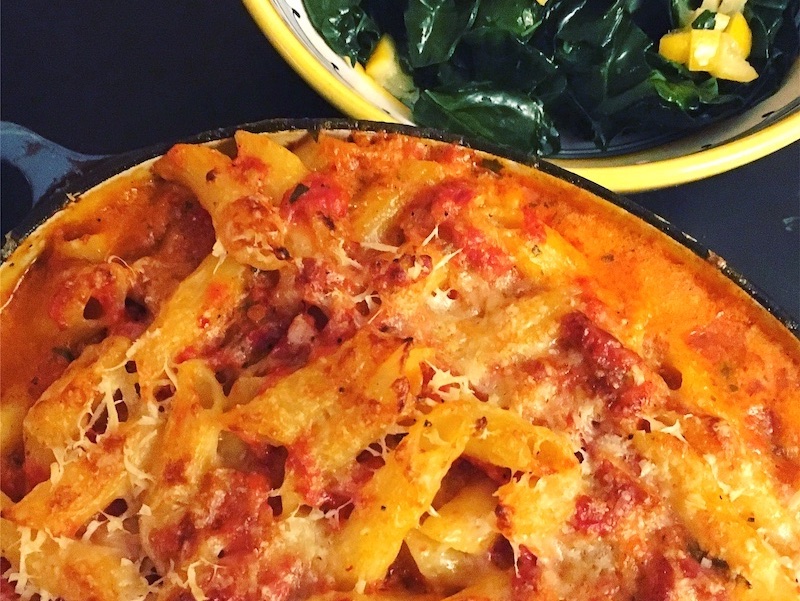
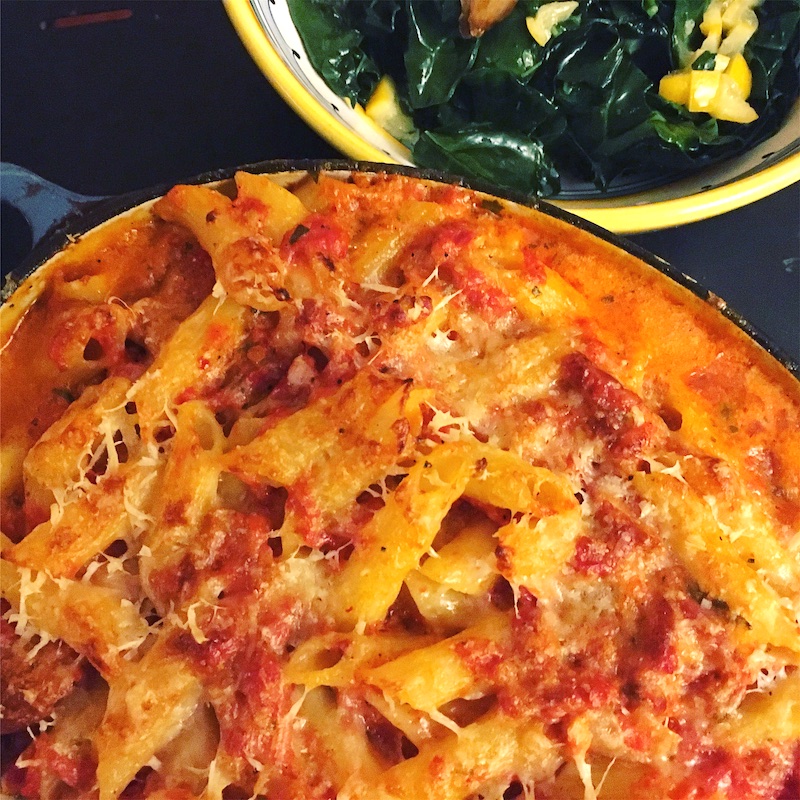 Noodle casseroles figured prominently in the pantheon of dinner menus—the "primavera" version hadn't yet appeared and fancified it into "pasta"—with goulash,