Tuesday, June 18, 2013

Theme and Variation: Kim Chee Pimento Cheese


Contributor Jim Dixon of Real Good Food makes a truly impressive pimento cheese spread, one of those gotta-have-it signature recipes that qualifies as legendary. I'm planning on taking this new variation to our upcoming Fourth of July Free-for-All trip to the Gifford Pinchot.

I spent the weekend camping on a beach on the Columbia with a bunch of fathers I’ve known for more than 40 years. Beach bocce, boating adventure, too many mosquitoes and lots of good food made for fun-filled days.

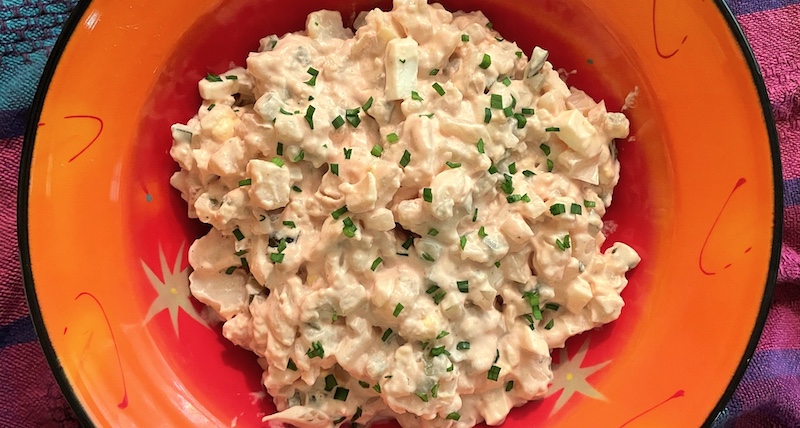
Here’s one of the things I made for the trip.

Kim Chee Pimento Cheese

I made my usual batch of pimento cheese, but added about half cup of the kim chee I made at a Portland Culinary Alliance workshop a few weeks ago.

1.25-1.5 lbs cheddar, roughly even mix of yellow medium and white sharp
4 roasted, peeled, seeded red bell peppers (about 2 cups worth after the peeling, etc., or the equivalent amount of roasted red peppers from a jar, either red, pimento or piquillo)
2-3 Tbsp. mayonnaise (homemade or Best Foods, aka Hellman’s east of the Mississippi; Duke’s in the south)
1 Tbsp. sweet pickle relish
1 Tbsp. extra virgin olive oil
1 Tbsp. good bourbon
Crystal hot sauce to taste
1/2 c. kim chee (Choi's, a local company, is wonderful if you don't have your own)

Grate the cheese with a box grater or with a food processor (I prefer hand grating since you need the processor bowl with the steel blade for the next step and I don’t want to have to clean it). Combine the peppers and other ingredients (here’s where you add the kim chee, but not the cheese) in the processor and pulse a few times. Add the cheese and pulse until well mixed, but not so much that you can’t detect little bits of red pepper. You want everything chopped and mixed but not pureed.

Eat with bread, crackers, raw vegetables, or, like we did, on chorizo and egg breakfast tacos with a little shredded cabbage and extra Crystal hot sauce.

Get my recipe for incorporating his basic pimento cheese spread into a truly unique mac'n'cheese. Bet this kim chee version would work as well!

Monday, June 17, 2013

No One Expects a Riesling Invasion


"The rieslings are coming! The rieslings are coming!"

Back in the latter part of the 20th Century, those words may have caused folks to run screaming through the streets, the better to get away from the sickly sweet invaders. These days, though, rieslings and the winemakers who love them have stepped away from the cloyingly sweet and into a more nuanced balance of fruit and tannins.

You can taste the results of their labors at the Riesling Invasion, a gathering of five wineries—Illahe Vineyards, Love & Squalor, Mad Violets, Ovum and Teutonic Wine Company—who will be pouring their best for you to enjoy on July 20th. Not only that, but Sauvage and Xico will be providing riesling-appropriate food items, and there will even be a DJ to spin some nuanced vinyl. All in all a good reason to run toward, not away from, these wines!

Details: Riesling Invasion 2013. Sat., July 20th, noon-5 pm; $10 cover. Event at Illahe Vineyards, 3275 Ballard Rd., Dallas. 503-705-6311.

Photo by Tom Maack from Wikimedia Commons.

My New Superpower: Hard-boiling Fresh Eggs!


cognitive dissonance: the discomfort experienced when simultaneously holding two or more conflicting cognitions: ideas, beliefs, values or emotional reactions. In a state of dissonance, people may sometimes feel "disequilibrium": frustration, hunger, dread, guilt, anger, embarrassment, anxiety, etc.

This is the perfect definition of my state at this time of year, though my situation is probably not what psychologists were considering when they came up with the term. To wit: I love farm fresh eggs, whether purchased at the farmers' market or my favorite independent farmer, with their pastel green, beige, brown, dark brown or even bronze shades and variously speckled or, as my 3-year-old nephew says, "sparkly" shells. (I let him pick out his own eggs for scrambling—he always chooses the sparkliest.)

The problem comes when I need to hard-boil them for potato salad or, worst, for deviled eggs where the solid whites need to be pristine holders for the fluff of yolk that sits in their convex cups. The magic of the preparation dims substantially if the whites look more like 4-wheel-drive tire treads, and I've struggled with various techniques to make these fresh eggs easier to peel. I've even gone so far as to buy store-bought eggs in a desperate moment, knowing that they're likely at least a month old and the membrane surrounding the white has started to break down, releasing its sticky hold on the shell.

Some research gave me a new, and even deadly, superpower. With it I can now hard boil the freshest of fresh eggs and they'll peel like a dream, practically falling off the egg with the slightest of tugs. I'm sharing it with you so that your summer can be full of the loveliness of those dreamy yolks and pristine whites. But, like all superpowers, you must promise to use it only for good.

Hard-Boiled Fresh Eggs
  1. Make sure your eggs are at room temperature. This will reduce cracking when submerging them in boiling water.
  2. Bring a pot of water to boil over high heat.
  3. Slowly lower the eggs into the boiling water.
  4. When boiling resumes, set timer for 15 min. and reduce heat to keep at a low boil.
  5. When timer goes off, drain eggs and submerge in ice bath until chilled, then peel.
Get my recipes for Spanish-style Deviled Eggs and Curried Mustard Deviled Eggs.

Friday, June 14, 2013

In Season NW: Green Garlic


Like Hood strawberries, fiddleheads and spring onions, green garlic is only available for a short stint in late spring. You'll see these immature heads of garlic, usually with at least some of the stalk attached, in bunches or singly on farmers' market tables, and you should grab a few to take home to use in sautés or to toss with other spring things.

Trimming, step 1.

The other evening I felt like we needed a break from some recent meat-binging, so I clipped some parsley from the raised beds, pulled three or four of the first radishes from their loamy naps in the garden and stripped the feathery green tips from a bunch of carrots.

The immature cloves, right.

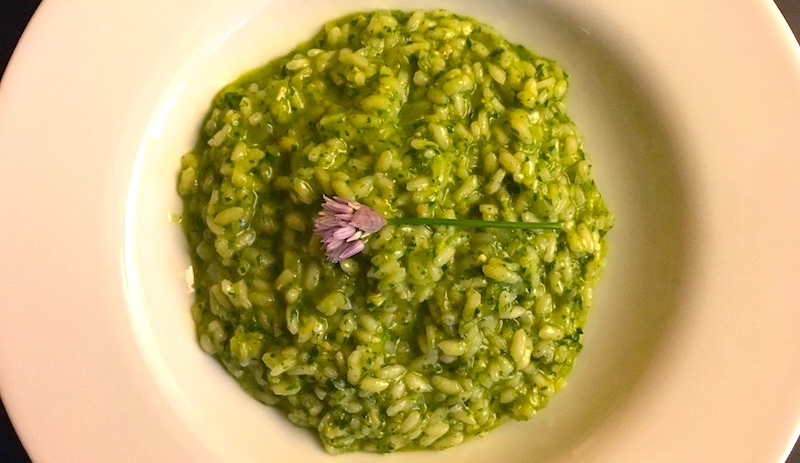
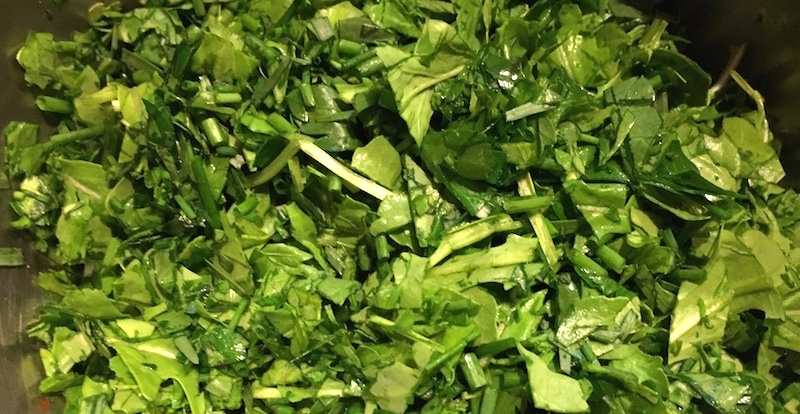
It took just a few minutes to trim up a head of the garlic and throw it and the greens (including the radish greens, of course) into the processor to make a quick pesto, then I sliced the radishes into matchsticks and tossed it all with pasta for a quick main course. Paired with a glass of rosé and a salad of garden lettuce dressed with balsamic and olive oil, it was a seasonal feast fit for a king.

Wednesday, June 12, 2013

Garden 2013: Modest Beginnings


The garden this year is off to a slow start, mostly due to some unseasonably hot weather in May followed by temperatures that dipped down into the 40s at night. When the lettuces I planted declined to show themselves after a couple of cold nights, I was feeling a little hapless until some of my greener-thumbed acquaintances mentioned they'd had trouble with germination in their gardens from the chilly nights.

Peas emerging.

After a certain amount of commiserating, I replanted the bare spots with lettuces developed by Frank Morton at Wild Garden Seed in Philomath (near Corvallis), whose excruciatingly beautiful varieties are on regular display at the Gathering Together Farm stands at local farmers' markets. Joining them were radishes like those above, which had no trouble popping out of the soil quickly, making them such a joy to grow. I'll be using their greens in pestos, soups and pastas, and chopping the peppery red roots into salads and sprinkling in tacos.

The tomatoes this year were swathed in their protective jackets of water until a week ago, and they're anxiously waiting for some sunny days to really take off. Aside from that, there are pole beans, sugar snap peas, carrots and basil beginning to poke their heads out of the dirt. It all gives me hope for the days, hopefully some of them sunny, to come.

Monday, June 10, 2013

Farm Bulletin: Barn Owl Update


In a previous post, contributor Anthony Boutard of Ayers Creek Farm wrote of his discovery of a barn owl chick that had fallen out of its nest. It seemed unhurt, so he returned it to its siblings, not without some amount of effort. Here is an update.

The parents have raised a total of three young, including, presumably, the one crammed back in the barrel. The owlets now sport their immature plumage, with just wisps of down lingering.  They are now flying in and out of their nest box, but not yet graceful in flight. Physically, though, they are at their prettiest at this point. What a difference a fortnight makes.

Friday, June 07, 2013

In Season NW: Agretti! (Gesundheit!)


When I wander the aisles at a farmers' market, it's like I'm on a treasure hunt. I'm always scanning for things I've never seen, for the oddball fruits and vegetables that farmers are growing to try to capture shoppers' (and chefs') imaginations.

The other day I was drawn to a basket of frond-like greens labeled "agretti" at the Groundworks Organics stand at the King farmers market. It was something I'd seen on menus around town, but I'd never come across it in the store or at a market or cooked with it at home. Would this be my discovery of the day?

Knowing the internet is always in my hip pocket and would provide guidance, I picked up a bunch and, sure enough, a little searching led to information as well as uses for this pretty gem. Turns out it's a succulent, Salsola soda, known also as Friar's Beard ("Barba di Frate" in Italian) and is grown in saltwater-irrigated land in the Mediterranean. It's often chopped and used fresh both for its crunchy texture and slightly salty character, but it can also be cooked and added to soups, stews and pasta dishes.

Since dinner that night was still an open question, I decided to combine it with cherry tomatoes, anchovies and garlic for a twist on a favorite pasta dish. It not only added wonderful color and crunch, but made a great conversation starter around the table. I call that big win for what started as a chance discovery.

Pasta with Cherry Tomatoes, Garlic, Anchovies and Agretti

1 lb. pasta
2 Tbsp. olive oil
10 cloves garlic, peeled
1 jar or tin of anchovy fillets (2 oz.), drained
1 pint cherry tomatoes
1 bunch agretti, chopped in 1" pieces
1 c. parmesan, grated

Bring pot of water to boil. Add pasta and cook till al dente.

Head oil in skillet over medium-high heat until it shimmers. Add garlic cloves and sauté till slightly browned. Remove skillet from heat and gradually add anchovy fillets, crushing them with the back of a spoon until they dissolve. Return skillet to heat and add tomatoes. Cook until tomatoes collapse and sauce thickens. Remove from heat and add agretti, stirring to combine and slightly wilt the agretti.

Drain pasta and put into large serving bowl. Pour agretti sauce over top and toss gently to combine. Garnish with grated parmesan and serve with more grated parmesan at the table.

Thursday, June 06, 2013

GMO Wheat in Oregon: Monsanto says, "Huh?"


It's a mystery worthy of Sherlock Holmes himself. Ten years after a strain of Monsanto's so-called "Round-Up Ready" wheat was tested in Oregon (Wait, you didn't know that?) the same strain of the wheat, which was abandoned by the company and was said to have been completely destroyed, has been found in an Eastern Oregon farmer's field.

Subsequently, Japan, which bans "organisms modified by modern biotechnology (living modified organisms)," has summarily canceled existing and future orders for NW wheat. Other countries are threatening to do the same in what could amount to a blow to Oregon's wheat crop valued at between $300 million and $500 million dollars.

What does Monsanto have to say in its defense? Well, it's floated accusations of "industrial sabotage" by unnamed parties, but basically, as Stephen Colbert quotes in the clip above, it says "it is completely mystified by the appearance of the wheat."

In the meantime, I'm going looking for my deerstalker and Calabash.

Wednesday, June 05, 2013

In Season NW: Spring Things…Baby Artichokes


Tender young things are everywhere at the farmers' markets these days, from curly green scapes of garlic to sweet spring onions to the diminutive first buds of the artichoke flower. These baby artichokes are different from their more developed selves, and not just in their size. Because they are picked at such an early stage of development, they don't have the leathery leaves or the fuzzy choke, which means they can be eaten whole after some trimming.

Snap off outer leaves.

I'd bought a couple of pounds of these little gems at the King farmers market, thinking they might come in handy for an appetizer that I needed to take to a dinner that evening. The sizes ranged from itsy bitsy (cones a couple of inches long) to small (a little over three inches), and I was planning to combine them with some of Dave's pancetta and chopped spring garlic for a finger or fork-friendly snack.

Sauté in pancetta fat…mmmmm.

I'd recommend buying more artichokes than you think you'll need, since the trimming process whittles down the size of the artichokes by more than half. But once that's done, I think you'll find this sauté is fabulous as an appetizer or as part of an antipasto platter, but would also be terrific tossed with pasta. A fittingly delicious tribute to spring!

Baby Artichokes with Pancetta, Garlic and Lemon

2 lbs. baby artichokes (or more)
1 Tbsp. olive oil
1/4 lb. pancetta or bacon
2 Tbsp. garlic, minced fine
Zest of 1 lemon
Juice of 1 1/2 lemons
1/2 tsp. pimenton (smoked Spanish paprika), optional

To prepare the artichokes, fill a medium-sized mixing bowl with water and the juice of 1/2 lemon. Snap off the outer leaves of each artichoke until you reach the tender, pale inner leaves. Cut off the upper half of the cone and discard. With a paring knife, trim the stem to 1/2" and peel off the outer skin. Halve each artichoke and immediately place in bowl with lemon water to keep them from browning.

In a large skillet, heat the olive oil and fry the pancetta until browned and its fat is rendered. Remove pancetta from skillet with a slotted spoon and put aside, leaving fat in the skillet. Remove artichokes from acidulated water and dry slightly, then add to fat remaining in skillet. Sauté till tender, about 9 minutes. Add garlic and pimenton (if using) and sauté briefly. Remove from heat and stir in lemon zest and remaining lemon juice. Cool to room temperature and serve.

Tuesday, June 04, 2013

The Americano, a Perfect Summer Cocktail


There's a reason that summer cocktails are icy, fruity or citrusy concoctions topped off with tonic or soda and served in a frosty tumbler. I mean, on a hot afternoon on the patio or after a long day outdoors, who really needs a big alcohol bomb that'll knock you on your keister?

Summer's only just getting started here in the Northwest, with temperatures edging up into the 70s and even occasionally into the 80s, so here at the house we're finding ourselves thinking of lighter, fresher cocktails when happy hour rolls around. One that's been making a regular appearance on the backyard roster is the classic Americano, which some historians of cocktail-iana say is the predecessor to the Negroni, another house favorite.

Legend has it that in 1919, Count Camillo Negroni invented the eponymous cocktail by asking the bartender, Fosco Scarselli of Caffè Casoni in Florence, Italy, to strengthen his favorite drink, the Americano, by adding gin rather than the normal soda water. The bartender also added an orange garnish rather than the typical lemon garnish of the Americano to signify that it was a different drink.

Whether true or not, the Americano, with its gorgeous red color and sprightly, refreshing splash, is the perfect capper to a warm summer day.

Americano Cocktail

1 1/2 oz. Campari
1 1/2 oz. sweet vermouth
Club soda
Lemon twist

Fill cocktail glass half full of ice. Add Campari and sweet vermouth. Top with club soda and stir to combine. Add lemon twist.

Monday, June 03, 2013

Quick Hits: Sen Yai, Alberta St. Pub, Reister Farms


"Sen Yai specializes in Kuaytiaw, the noodle dishes of Thailand. Kuaytiaw is eaten at all times of the day; as a late night snack, economical dinner, a quick lunch on the run, even for breakfast."

True to the Pok Pok ethos and like his other local eateries, Andy Ricker's brand new Sen Yai Noodles is packed with native vibe and lots of hard-to-pronounce items on the menu. To be clear, in my book that is a reason to run in, rather than away from, a restaurant.

Roasted peanuts.

I also broke one of my cardinal rules when I visited, which is to give a new place a couple of months to work out kinks, settle in and get a groove going. But when the lovely and massively talented Ivy Manning called with an invite to check it out for lunch, how could I say no? Lots of other folks had the identical urge that day, and while there were plenty of seats available when we got there, within a few minutes every tiny table in the place was taken, with a line snaking out the door.

Boat noodles.

Ivy's been to Thailand and knows its cuisine quite intimately, so I let her do the ordering. We started with the house-roasted red peanuts, which came as a small stapled packet containing the aforementioned peanuts along with lime leaf, chiles and salt…a crunchy, delicious teaser. Traditional Kuaytiaw Reua or "boat noodles" were a big hit, rice noodles in a complex, richly aromatic dark broth, three preparations of beef and "water spinach" (ipomoea aquatica) as well as dry-roasted chiles, herbs and bean sprouts.

For noodle-heads this is a must-try and, though prices aren't cheap, the preparations are terrific.

Details: Sen Yai Noodles, 3384 SE Division. 503-236-3573.

* * *


Once again I broke the "don't go to a just-opened restaurant" rule when I decided to head up the hill to the just-opened Alberta Street Pub with the inimitable, estimable talents of Kevin Sandri (Garden State and Burgatroyd food carts) in the kitchen. I knew he'd been perfecting the stalwarts of any pub menu, a standout burger and fabulous fish'n'chips, and I wanted to stop in to both support him and check out the progress of his efforts.

Boiled peanuts.

Along with my two favorite testers, my husband Dave and our son, both Sandri fanatics, we got the only three seats left in the bar, which was packed due to a crowd waiting to attend an evening concert in the attached performance space. Sandri and his crew were handling the opening week pressure with aplomb, though, since our beverages and food orders popped out of the kitchen without delay.

We started with the boiled peanuts, a treat Sandri came across while driving through North Portland, spotting a guy selling them on a corner. Immediately smitten, he'd been obsessively working on perfecting this Southern specialty for the menu. In their shells and soaking in a dark, salty broth, they were amazing, a soft, messy, delicious counterpart to the roasted peanuts I'd had at Sen Yai (see above).

Strawberry hand pie.

Even with Sandri's mad skills at hand, I was nervous about the fish'n'chips, having been disappointed at so many other places, but one look at the plate when it arrived and my fears were erased. Three good-sized pieces of delicately battered, perfectly cooked cod were resting comfortably on a pile of crispy hot fries, sided by a slightly sweet tarragon and dill-inflected tartar sauce. And it goes without saying that the porchetta sandwich, pork shoulder and belly with salsa verde, mayo and arugula, was sublime given Sandri's sterling meat cred.

We even sprang for the Whiffies fried hand pie filled with local strawberries, a treat I'll be remembering for a long, long time. I can only hope that Mr. Sandri decides to stay in this kitchen for an equally long, long time.

Details: Alberta Street Pub, 1036 NE Alberta St. 503-284-7665.

* * *


More meat is good meat in my book, especially when it comes from animals pasture-raised on a small family farm. Which is what drew me to the awning at the Buckman Farmers Market with a hand-lettered blackboard that read "Reister Farms." Well, that and the fact that I'd just run into Mark Doxtader of Tastebud, who was eagerly devouring a lamb kielbasa dog featured on that same blackboard. So with the attitude that if Mark likes it, I probably will, too, I wandered over.

The dog, grilled before my eyes à la Foreman, was a hefty length of lamb innovatively wrapped in a pretzel roll from Fressen Artisan Bakery and smothered in fresh sauerkraut.  The salty sturdiness of the roll was a great foil for the lamb and sauerkraut, and held together till the very last bite, a good test of any hot dog bun worthy of the name.

I'm looking forward to getting to know more about the Reisters, who hail from Washougal, and their farm. In the meantime I'll be sampling their dogs and whatever other wares they're featuring the next time I'm at the market.

Details: Reister Farms products can be found at the Buckman Farmers Market on Thursdays from 3-7 pm, at SE 20th & Salmon between SE Belmont and SE Hawthorne in the parking lot of Hinson Baptist Church.

Saturday, June 01, 2013

Puppies at Play


I've been bombarded with inquiries about Kitty's puppies, how they're doing, what they look like, etc., etc. Since I spent about four hours puppy-sitting yesterday, it was a prime opportunity to observe their activities, which consisted of play, sleep, eat, repeat.

Napping.

Occasionally these were interrupted by squatting in the wood chips at one end of their pen, but pretty much the previously mentioned three activities predominated. As you can see, they're looking less like guinea pigs and more like puppies, and are just beginning to chew on anything that catches their fancy. (My next visit is going to require close-toed shoes.)

More napping.

By the way, the sound in the background is a radio station. Kim Shira, the owner of Coedwig Cardigans, believes it's important to acclimate puppies to normal household sounds from the time they're very young. To that end she has a radio playing occasionally, as well as tapes that feature sirens, thunderstorms, traffic and other outside noises so they won't tend to be as reactive later.

You've got to admire someone who loves the breed as much as she does, and who's as conscientious as she is about how they're brought up.

Tuesday, May 28, 2013

Oregon Artisan: Lisa Jacobs of Jacobs Creamery


I've been watching Lisa Jacobs come into her own as a cheesemaker since her very first appearance at the Portland Farmers' Market at PSU. It was a privilege to write this article for the Oregonian's FoodDay section.

Not many cheesemakers can say they gave up a potentially lucrative law career to pursue the joys of 18-hour days with their hands submerged in a vat of curds, or up to their elbows in car grease because their truck broke down after picking up a couple of tons of milk from the dairy.

But Lisa Jacobs of 3-year-old Jacobs Creamery said she was so disillusioned as a third-year law student by what she saw as the life of an attorney that she left to start her own online advertising company. After hiring out most of the work to subcontractors, she found herself with time on her hands and signed up for an intensive three-day cheesemaking class in Massachusetts with Ricki Carroll, a cheesemaker who was also a major character in Barbara Kingsolver's book "Animal, Vegetable, Miracle."

Read the rest of the story.

Monday, May 27, 2013

An Infusion of Spring: Elderflower Syrup


My mother didn't get it when her only daughter would want to mow the lawn. After all, she had two sons for that purpose, didn't she?

I loved yanking the starter cord—sometimes over and over—and hearing the motor rumble to life, then adjusting the choke just so. It was a pleasure to walk up and down, slicing the yard into neat rows. Other areas were better for rectangles, where I'd start at the outside and spiral my way to the center as if walking a green labyrinth.

Elderflowers in situ.

Contrary to all the rules, and what really inspired my passion for mowing the grass, was walking barefoot behind the machine, letting the cut blades of grass turn my feet a bright green and having the intoxicating smell of mown grass fill my head. It was those first mowings of spring that I loved the most, when the grass was rich and dense and most fragrant.

Many years later, my friend Linda Colwell introduced me to another passionate scent of spring when she offered a spoonful of a pale, hay-colored liquid from a jar in her refrigerator. I smelled it before I tasted it, a light, citrus-y, floral aroma with a tinge of bitterness to balance its sweetness. It was an elderflower syrup, made from the first blossoms of the Sambucas nigra, or elderberry, that she had gathered at Ayers Creek Farm in Gaston.

Elderflowers steeping in syrup.

It took me two years to finally get around to making my own, pestering Anthony and Carol Boutard with inquiries about when the bushy plants would be blooming. It was a sunny spring morning when I drove out, about three days after the blooms had first appeared, and Carol thought there would be blooms enough to make a gallon or so of syrup.

She drove us out in the all-purpose Gator, with Tito sitting on my lap and guiding us to the orchard of mixed fruit trees and elderberries. We walked through the tall orchard grass from one plant to another, snipping off the delicate clusters of white flowers that were in full bloom, leaving others that weren't quite fully blossomed for another day, or to form berries that could be harvested later in the summer.

The Martinique (thanks, Kate!).

Carol said the two gallons of flowers we'd gathered, about a full shopping bag, would make a gallon of syrup. When I got home I checked my friend Hank Shaw's blog for his elderflower cordial recipe to use as a guide. With some coaching-by-text (you could call it "cexting") from Linda, three days later I had about a gallon of a rich syrup that we've been using to make spritzers and cocktails.

I've frozen little jars of the cordial to pull out this summer and serve over ice, with or without the addition of a little alcohol, to remind me of the scent of spring in the Ayers Creek orchard, wandering through the grass with Carol. It's almost as much fun as having green feet.

Elderflower cordial

2 gallons of flower clusters, about a shopping bag full*
1 gallon of water
7 lbs. sugar
8 lemons

The stems of the elderflower are toxic, so separate stems from flower clusters, stripping them with your fingers or with scissors. You'll have lots of clusters with the teeny green stems still attached, but don't worry about these. Just remove as much of the stem as you can. Then place in a large pot. (I used a 5-gallon stock pot.)

Combine the water and sugar and bring to a boil, stirring until the sugar is dissolved. Remove from heat and allow to stand and cool to room temperature. While the syrup is cooling, zest the lemons and juice them. When the syrup has cooled, pour it over the blossoms and stir in the lemon juice and zest. Cover the pot with a towel and/or a loose-fitting lid and place in an out-of-the-way spot for three days.

Uncover and strain through fine mesh sieve or cheesecloth. Can be refrigerated for a week or so in a covered jar or frozen in sterilized canning jars. These make terrific gifts and, believe me, you'll have plenty for later.

* Springwater Farm sometimes has elderflowers at the PSU and Hillsdale farmers' markets during the fleeting season when they're available.

Martinique Cocktail
From Kate Ramos of ¡Hola! Jalapeño

Makes one cocktail.

3/4 oz. elderflower syrup or elderflower liqueur
1 oz. freshly squeezed lime juice
1 1/2 oz. light rum
Ice

Place all of the measured ingredients in a cocktail shaker and fill the shaker halfway with ice. Shake vigorously until chilled. Strain over fresh ice into a chilled cocktail glass.

Sunday, May 26, 2013

Farm Bulletin: A Small Act of Kindness


Working with nature in its cyclical processes is the main occupation of a successful farmer. Occasionally it means choosing to intervene in its harsher aspects, as contributor Anthony Boutard of Ayers Creek Farm describes.

Yesterday morning, we were greeted by this barn owl chick. It is just beginning to develop its immature plumage on its wings. They are hideous and lack charm until they fledge.

It had been tossed or fallen out of the nest. Sort of hard to say. Most years we find a dead chick or two on the barn floor. Earlier this week, a much smaller chick lay dead beneath a nest in our other barn.

Not relishing the task of putting it back up in the box, and cautious lest it had an illness, we waited until mid-afternoon. Still alive and punchy, show no signs of malaise, we decided it was worth returning to the nest. We grabbed it, scaled the ladder and jammed it back into the box. Our effort was rewarded by a horrible and sustained hissing from the other occupants. Checked this morning and there is no sign of the beast on the barn floor, so it is probably fine.

Barn owls are excitable and humorless creatures, make a mess of the place and equipment with their casts and urine, but seeing their ghostly forms over the fields at night makes them tolerable companions.

Friday, May 24, 2013

Big Table Farm: Crowdsourcing a Winery


Call it a 21st century barn raising. Winemakers Brian Marcy and Clare Carver of Big Table Farm are not known for doing things in the traditional manner, from the way they farm to the wines they make. So it didn't come as a surprise when they announced that they were turning to friends and fans to help finance their new winery, to be built on their farm in Gaston.

You see, Brian and Clare believe in growing and producing what they love to eat and drink, from the eggs their chickens lay to the pork from their pigs to the award-winning white, red and rosé wines that they serve on their table and offer to their buyers. It's a hard-won and not-very-lucrative life, which doesn't always neatly fit the forms used by big banks and lending institutions, but their passion shines through in the quality of their labors.

And it's not just their exuberant fans who think so…Big Table Farm wines have received high scores from the biggest noses in the wine world, from Robert Parker's Wine Advocate to Wine and Spirits magazine to Stephen Tanzer's International Wine Cellar.

To accomplish the next step in their dream of making their own wines on their own land, they've created a Founder's Circle for folks who want to help. For a donation of $1,700, Founders will receive a six-pack of magnums from the 2012 vintage and an invitation to a Big Table Farm Feast in July of 2014 to celebrate. To me, that sounds like a dream worth investing in.

Photo of rainbow and magnums by Clare Carver.

Wednesday, May 22, 2013

Artichokes: Bless Their Fuzzy Little Hearts!


Artichokes are plentiful at the farmers' markets this time of year, so this recipe from contributor Jim Dixon of Real Good Food comes at the perfect moment.

Oregon farmers grow great artichokes, and now is the time to eat them. I like the purple-tinged variety, especially when they’re very small and the fuzzy choke is minimal to non-existent. They still take a bit of prep, but the results are worth it. If you’ve never trimmed an artichoke, search Youtube and watch a couple of videos. [Here's a good one from Gourmet. - KAB] And keep your knife sharp. You'll need a dozen or more of the little ones for the recipe below.

Carciofe Pantesco

Carciofe is Italian for artichokes; Pantesco refers to the island of Pantelleria. I use it as shorthand for the delicious combination of Pantellerian capers and oregano with garlic and anchovy.

Split the artichokes from top to bottom, cut off the upper two-thirds, pull off leaves until you get the really light-colored inner ones, and use the tip of your knife to dig out any fuzzy choke. Most recipes call for putting cut artichokes into acidulated water (lemon juice or vinegar added) to prevent browning, but they turn brown when you cook them anyway, so I skip this part. Put the trimmed artichokes halves cut side down in a heavy pan (one you can cover) with a enough extra virgin olive oil to cover the bottom.

Add a few (2-4) of the best anchovies you can buy (these at Gustiamo are the best I’ve found and worth every penny; New Seasons carries oil-packed anchovies in jars from Sciacca, Sicily, home of Madre Terra), cleaned if salt packed, diced small. Toss in a few cloves of garlic, diced, a couple of tablespoons of the Pantellerian capers (rinsed of salt), and at least a tablespoon of the island’s oregano. Cook everything gently in the oil for 5 minutes, then add about a quarter cup of water, cover, and simmer for about 15 minutes or until the artichokes are tender. Good hot, better at room temp.

* * *

Jim has announced a not-to-be-missed opportunity on Tuesday, May 28:

I met Brian & Catherine Faris at the farmers market a few years ago. They told me about their house and olive groves in Puglia and their dream to someday bring the region’s extra virgin olive oil to Portland. It took some effort, but you can taste that oil Tuesday, May 28, at my Activspace “warehouse.”

Come by from 5-7 pm, meet Brian & Cathy, and try Pascarosa extra virgin olive oil. Tom & Ani from AniChe Cellars will be sampling wine from the Columbia Gorge, and we’ll have some traditional Pugliese food.

Details: Pascarosa Olive Oil Tasting with the Founders. Tues., May 28, 5-7 pm; free. Real Good Food, 833 SE Main St., Suite 122, on the ground floor at the NE corner of the building.

Quick Hits: Raven & Rose, Mirakutei, Clemente's


In recent years there's been a dearth of great places to have lunch downtown, with most of the hot lunch action taking place on the east side of the river. Not that I'm complaining, mind you, since that's my side of town, but when there are friends on the west side with prescribed lunch hours, it'd be nice to have someplace decent to drop into.

Perfect celery root soup with lardons, chive blossoms.

Fortunately for downtowners, there's more than just Clyde Common and Higgins for a nice-to-fancy spot for a business lunch, a meet-up with your auntie or just a soup-and-sando with a friend. And since it's located in one of downtown's oldest buildings, a former stable for city father William Ladd's horses, Raven and Rose provides plenty of fodder (ha!) for conversation.

Rabbit Caesar salad.

Open less than six months, R&R's menu offerings, under the direction of Exec Chef David Padberg, are coming along nicely, with the intimate dining room opening for lunch just a week ago. Lunch revolves around a selection of soups and salads, a few sandwiches and a sampling of larger plates with staples like fish and chips, shepherd's pie, a couple of seafood options and a pasta dish that are augmented with Padberg's stable of seasonal vegetables and greens along with herbs from his prodigious garden.

Rhubarb phosphate.

The rabbit Caesar I ordered was spot-on, the rabbit, sourced from a small local farm, braised to fall-apart perfection and shredded over a bed of tender local greens. My friend's black cod was similar to the version found on the dinner menu, roasted and placed on top of cannelini beans, chard stems, celery and wild mushrooms. I couldn't resist ordering a rhubarb phosphate, though I was tempted by the anise spritzer that was also on the non-alcoholic beverage list. There is, of course, a complete menu of fully-leaded cocktails, wine and beer available, but I like the seasonal sodas that Padberg and Dave Shenaut, R&R's bar director, are developing, a category that isn't often found on PDX bev menus.

Next time I'm going for the fish and chips, since I'm obsessed with finding a decent representative of that most quintessential pub grub, and the burgers and fries ordered by other patrons looked luscious. Comfortable and clubby inside, with outdoor tables ringing the building on sunny days, this is a nice place to spend even a short lunch hour.

Details: Raven & Rose, 1331 SW Broadway. 503-222-7673.

* * *


It can be said, without equivocating in the least, that I adore sushi and its riceless cousin, sashimi. They would be my choice for breakfast, lunch and dinner if it was possible. Though I'm married to someone who, while he enjoys it on occasion, is just not as cuckoo as I am for these articles of Japanese cuisine, which means lunches are a good time to head out for a fix.

There are several good places to experience this food in Portland, though it's slow going getting around to them due to the (mostly justifiably) pricey tabs that can be run up sampling this and that. Mirakutei, just over the bridge from downtown on East Burnside, is a little hole-in-the-wall spot to do just that.

It's built its reputation on ramen, but I found both the sushi and sashimi to be moderately priced and cleanly made, with super-fresh fish that was beautifully and simply presented. Well worth checking out, especially on week days.

Details: Mirakutei, 536 E Burnside St. 503-467-7501.

* * *


Tables of steam trays, racks of meat under heat lamps and baskets and bowls heaped with pastries and out-of-season fruit have always puzzled me as a solution to a holiday breakfast. Maybe it's that Grannie and Uncle Henry and the nieces and nephews can all find at least one thing in the pile they'll like, but, really?

Clemente's.

Call us fogies, but we rarely go out for a traditional brunch or even for breakfast, preferring to sit and sip our coffee, read the paper and maybe have toast or an omelet, all in the comfort of our jammies and slippers. So on Mother's Day, when the males in the household said we were going to go on a road trip dubbed the Magical Mother's Day Mystery Tour, especially when it was mentioned that the dogs would be coming with us, I was in.

A terrific Bloody Mary.

Without a blindfold, it was pretty obvious when we hit Highway 30 that we were heading for the beach, so when we pulled into Astoria around one-ish I was more than ready to fill the gaping hole that had opened up since toast and coffee earlier that morning. Fortunately, we pulled up in front of Clemente's, the refreshing addition to Astoria's previously moribund dining scene, a place where seasonal and local rule and ingredients are treated with knowledge and respect.

Supremely satisfying crab Caesar.

It was a casual, order-off-the-menu brunch-or-lunch scene with not a steam table in sight, and I exercised my mother's privilege of ordering a Bloody Mary made with house mix and home pickles, followed by a half dozen local oysters. They needed just a couple of drops of lemon before being consumed, and then my crab Caesar arrived with a pile of Dungeness smiling up at me from the plate. Though Dave hit the jackpot with his seafood-alicious cioppino (top photo), crammed with salmon, oysters, scallops and crab. Other than a puzzling spoonful of quinoa on one side of my salad, it was a particularly satisfying way to celebrate the holiday, especially since it was followed by a romp on the beach and a (for me) sleepy ride home.

Details: Clemente's, 1198 Commercial St., Astoria. 503-325-1067.