

Rerun: A Good Woman Makes A Good Soup
I made this soup the other night, and if you looked up "comfort" in the dictionary, it wouldn't show your mom or your teddy bear or your pillow or your fuzzy slippers. It would be a picture of this soup along with the recipe. (BTW, I puréed it this time…what can I say but OMG.) Warm, terrifically flavorful and fill-your-belly delicious, it's easy and perfect for the season. And, though I don't do this often, I'm rerunning the original post I wrote two years ago. Enjoy.
Just before the holidays I was out at Ayers Creek Farm helping Carol and Anthony get ready for the big holiday market at Hillsdale. Well, I say "helping" but it's more like "trying to not seriously f*** things up" while packing boxes of preserves, weighing and measuring beans, polenta and wheat into little bags with a big scoop.
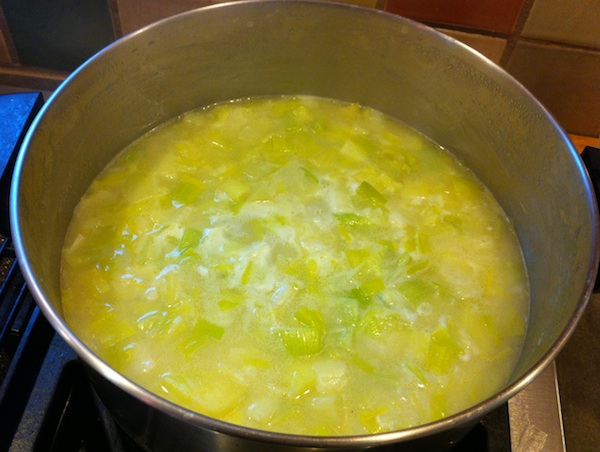 One of the great things about these days at the farm, aside from getting to wear my boots if outside work is required, is sitting down at the table for a big lunch of soup or stew, a hefty loaf of bread and a nice chunk of cheese. On this day, a bit before lunchtime, Carol asked me to pull a big pot out of the fridge that contained braised leeks and potatoes in a white-ish liquid.
While that warmed on the stove, Carol and I went just outside to the kitchen garden to gather a few leaves of sorrel that hadn't yet gone dormant. (Note to self: plant this next year!) It was chopped and thrown into the pot, a cup or so of sour cream was stirred in with some salt and we had a classic "Potage Bonne Femme," a potato leek soup rather like vichysoisse only with more leeks than potatoes.
Carol prefers to use water to cook her vegetables rather than chicken stock, feeling that the flavor of the leeks is more pronounced. In my attempts to recreate this at home, I used half chicken stock and half water and it didn't seem to overwhelm the leeks, and also added a little richness. I've made it with both real sour cream and (purists don't choke) Tofutti sour cream—Dave's lactose intolerant, remember—and both were amazing, even according to my very choosy son who's not crazy about substituting tofu products for the real thing.
It's a comforting, rich and company-worthy meal that is super simple to make in an hour or so. Add a crusty loaf of bread and some cheese with an ice-cold glass of French chardonnay alongside and you're going to get raves from your crew.
Potage Bonne Femme (Potato Leek Soup)
3 Tbsp. butter
4 leeks, halved and cut into 1/2" slices, about 4 c.
3 Tbsp. flour
2 c. water
2 c. chicken stock
4 med. Yukon gold potatoes, peeled and chopped into 1/2" or so cubes
2 tsp. salt
1 c. sour cream
1 c. coarsely chopped sorrel (optional)
3 Tbsp. chives, minced (optional)
Melt butter in soup pot or large Dutch oven over medium heat. Add chopped leeks and cook slowly for 5 min. Remove from heat, add flour and stir. Put back on heat and cook, stirring constantly and without browning for a minute. Add water and stock, stirring well. Add potatoes and salt. Bring to boil and lower heat to simmer for 50 minutes. Add sour cream and chives and stir to heat. Adjust salt to taste. Serve, garnished with chopped chives.
Option: Purée with immersion blender before adding the sour cream or cool and purée in a food processor (or blender) in batches. For a vegetarian or vegan version, substitute margarine for the butter and use water or a vegetable stock and Tofutti sour cream. Really, it'll be fantastic.
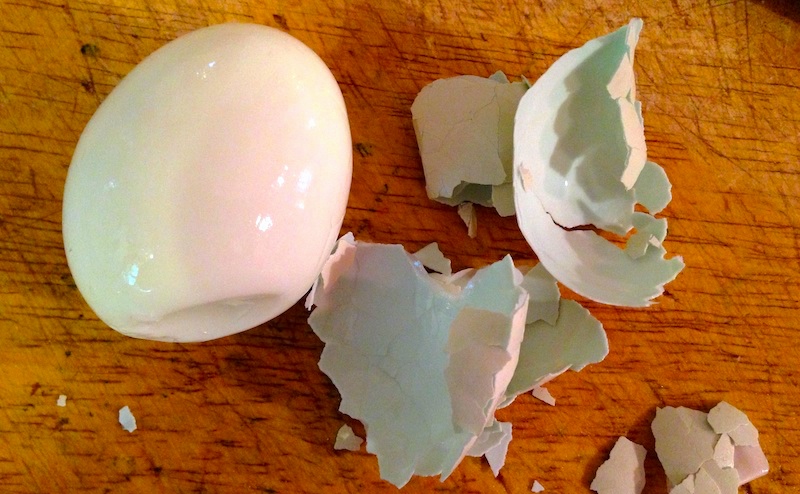
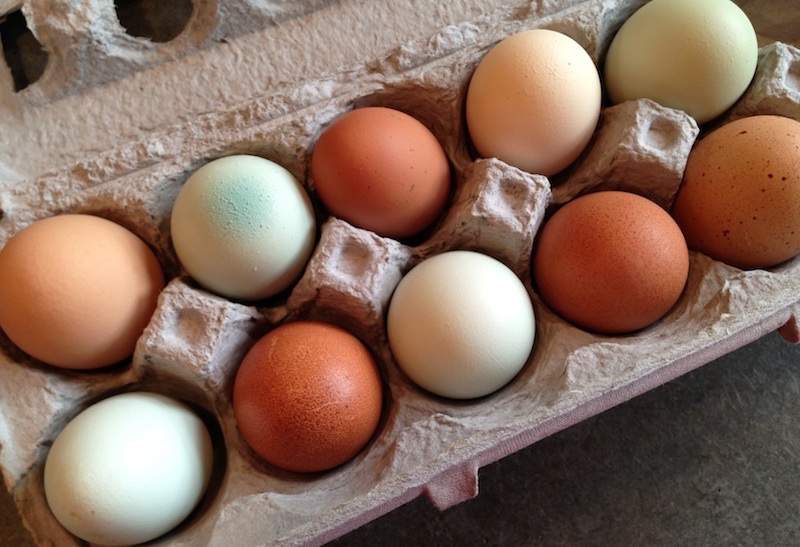
 The problem comes when I need to hard-boil them for potato salad or, worst, for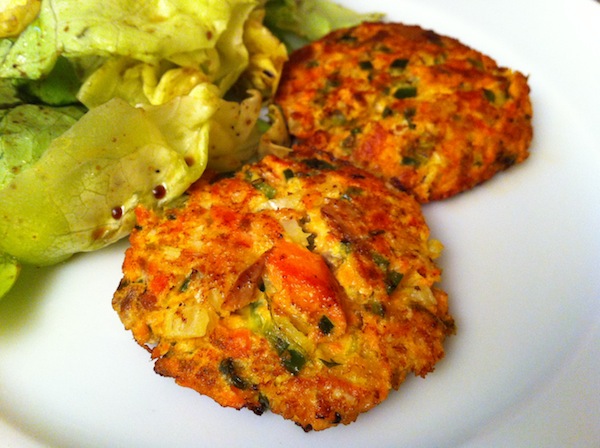
 On those nights when it's time for dinner (again???) and ideas are in short supply, I can open the door, survey the stocks, meats and sauces and come away with armloads of inspiration.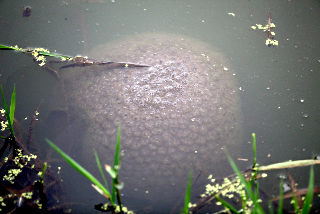
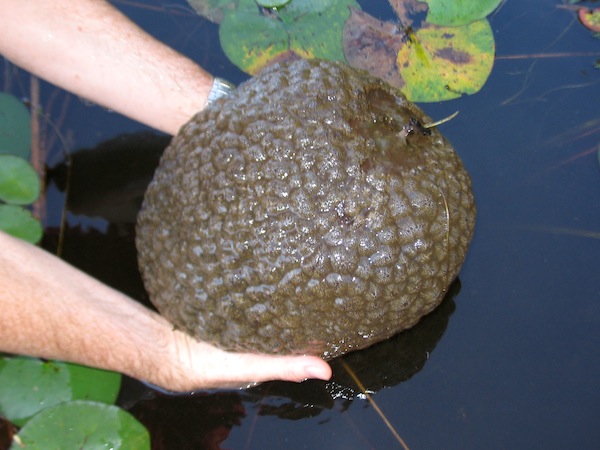 This week, a new creature appeared near the pump station. A large moss animal, or Bryozoan, was drifting in water (top photo). A gelatinous mass about the size of a soccer ball, it is known to bryozoologists as Pectinatella magnifica (left, from Wikimedia). It is the largest of the 22 freshwater moss animals found in North America. Most are delicate creatures that go unnoticed by all but a handful of dedicated professionals. Pectinatella is hard to ignore, and brought us back to invertebrate zoology class.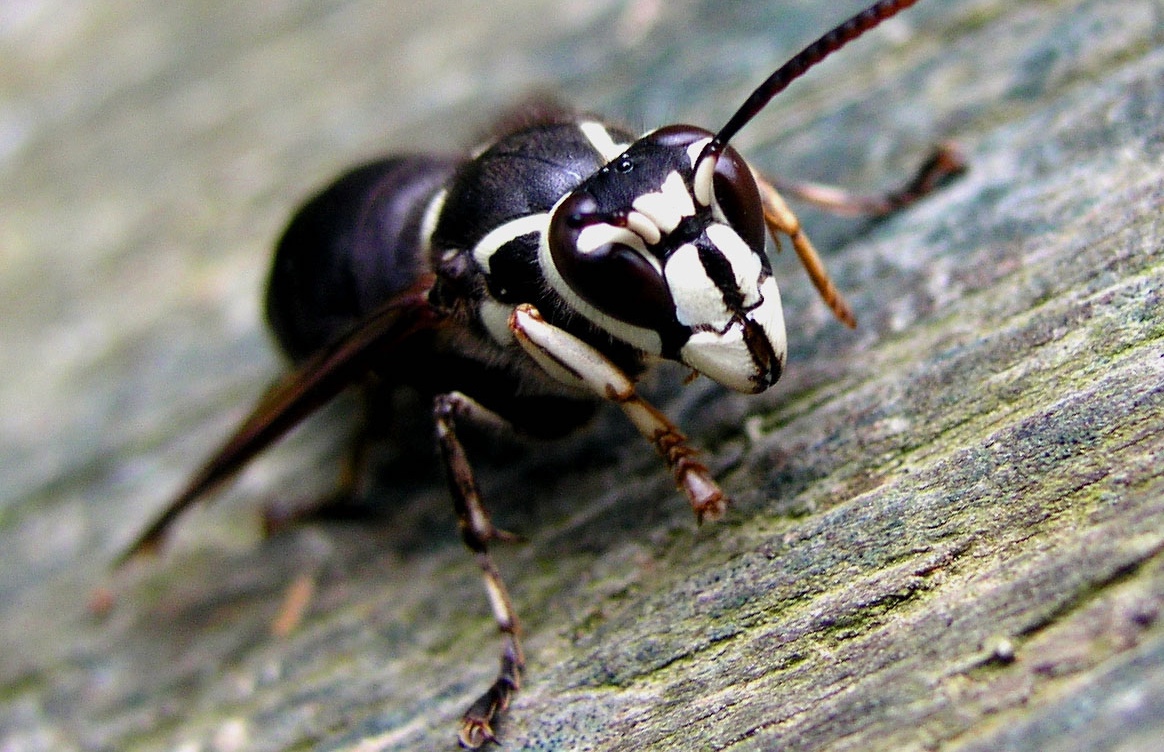
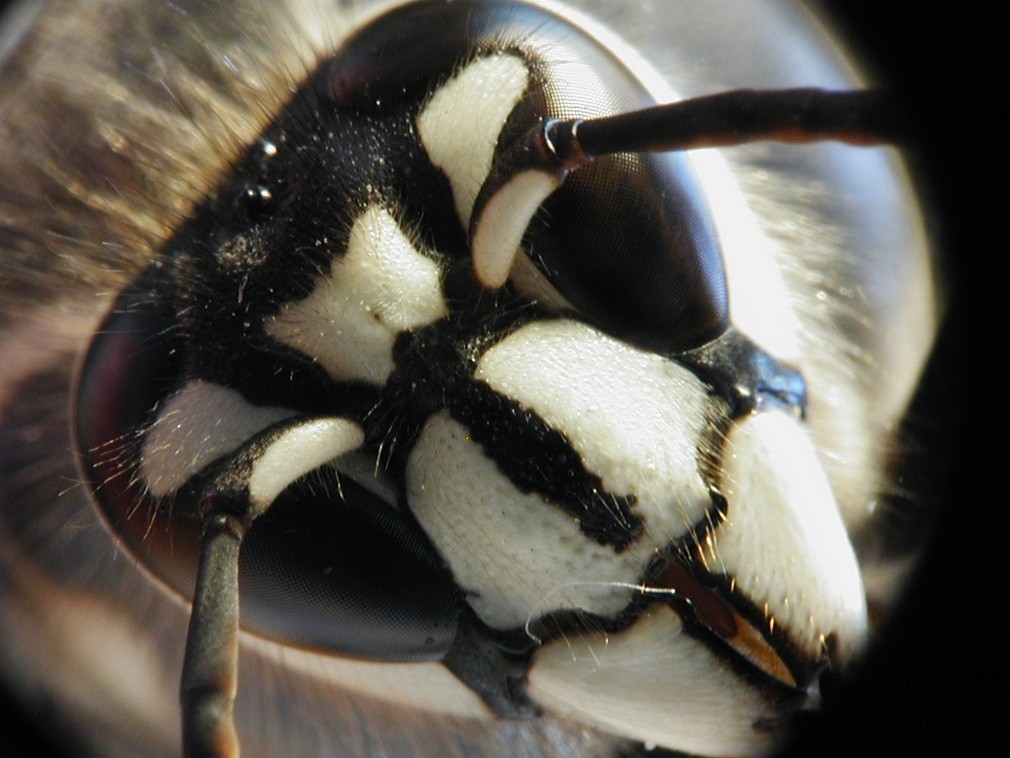 When you stumble across a nest, it is impossible to outrun them, though a hasty departure is required. We have found the trick is to stand absolutely still against the trunk of the biggest tree nearby, and the wasps will circle in an upwards spiral around the tree looking for your head. Soon, they depart. The most likable of the group are the paper wasps who build small, open nests under the eves of buildings. They build nests on our heavy truck, and seem unfazed by the trip to Salem and back two or three times a week. They watch us keenly, but leave us alone as we work around them. The wasps, as a group, use their stinger as a tool to paralyze their prey, and they inflict a more painful and longer lasting injection than honey bees.
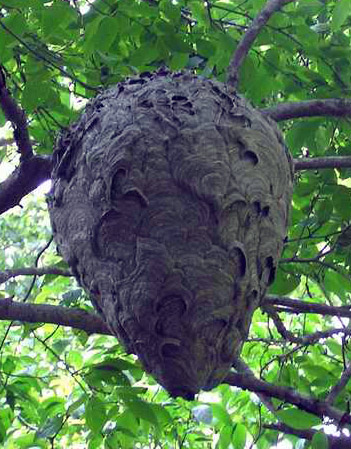 Last week, we found a bald faced hornet nest in a drooping branch of a mirabelle plum tree but a foot above the ground. When we mentioned this to our crew, they noted the locations of a couple of other nests likewise close to the ground. New Englanders have always regarded low wasp nests as a harbinger of a harsh winter, the 'seventh winter' in a cycle. We had a sense of this earlier, and we have planted our sensitive crops in more sheltered locations than in the past, and are hedging with larger plantings of the more hardy greens. Consequently, it was interesting to hear meteorologists predict a colder winter this year for Oregon.
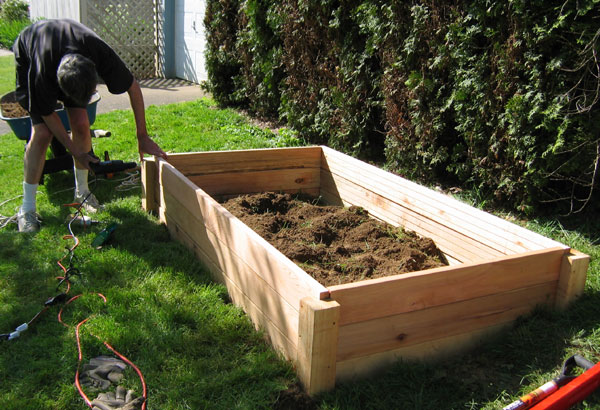
 This, of course, necessitated getting out the computer and
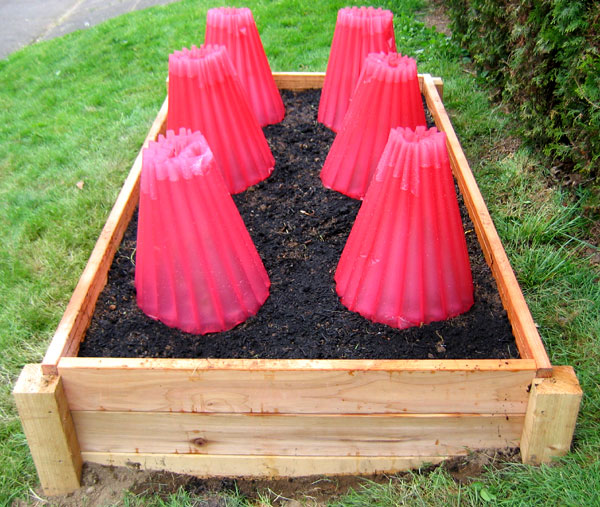
 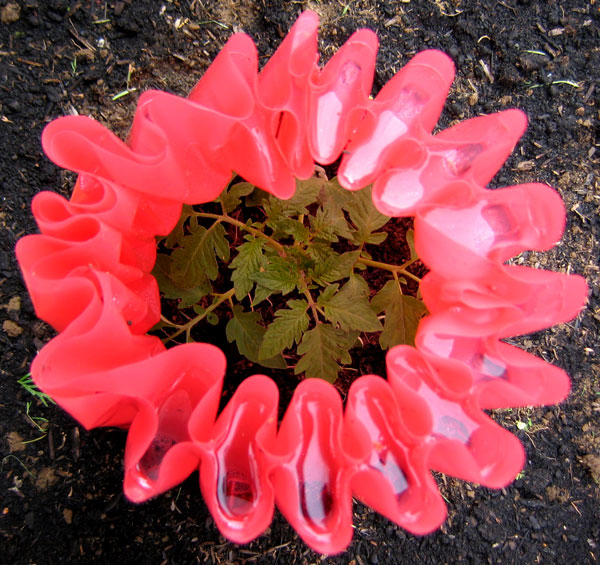 We had to wait a week or so for the weather and our schedules to clear, then we dug up the lawn, put the frame together and hauled in multiple bags of compost and manure, a solid afternoon of hard work that was rewarded with a very dry martini and toasts to the eventual harvest. The next day I planted two Cherokee Purple tomatoes, a Brandywine, a Green Zebra, a Black Plum cherry and an Isis Candy cherry, then surrounded them with their red Wall O' Water tomato teepees. The bases were scattered with basil and arugula seeds and watered liberally.